
The Rule of Thumb
Surface rust and a little swelling on a garage door are almost always cosmetic and can wait for a dry weekend — but rust at the bottom corners, soft or spongy wood, panels that no longer line up, or a door that binds when it opens means water is actually winning, and that needs attention now.
That one sentence will settle most kitchen-table arguments. The exceptions are where it gets interesting, and where one spouse is usually more right than the other.
Why Milwaukee Doors Take This Kind of Beating
A garage door in this area lives through more moisture cycles than almost anything else on the house. Winter brings deep cold, snow, and ice, plus the road salt that gets kicked up onto the bottom panel every time a car pulls in. Then spring thaw turns the driveway into standing water and mud for weeks, and the door sits in that splash zone daily. Summer swings the other way — humid air and sudden storms keep moisture around even when it's not raining. None of this is unusual or a sign you did something wrong. It's just what the bottom two feet of a garage door deals with every year, which is exactly why that's where problems start.
How to Tell Cosmetic From Real
Walk out and actually look at the door with this checklist in mind:
- Surface rust spots on a steel door — small orange freckles on the paint, especially near dings or scratches, are cosmetic. They happen because the paint layer got nicked and bare metal is reacting with air and moisture. Annoying, not dangerous.
- Rust along the very bottom edge or bottom corners — this is different. Water sits there after every storm or thaw, and if the paint and galvanizing have worn through, the steel starts to pit and eventually rust through from the inside out. This is a real problem, not a cosmetic one.
- Swelling or soft spots on a wood door — press a thumb into the bottom rail or corners. If it gives like a damp sponge, that's not paint failure, that's the wood itself absorbing water and starting to rot.
- Panels that no longer sit flush, or a seam that's separating — swelling that's bad enough to push panels out of alignment is structural, not surface-level.
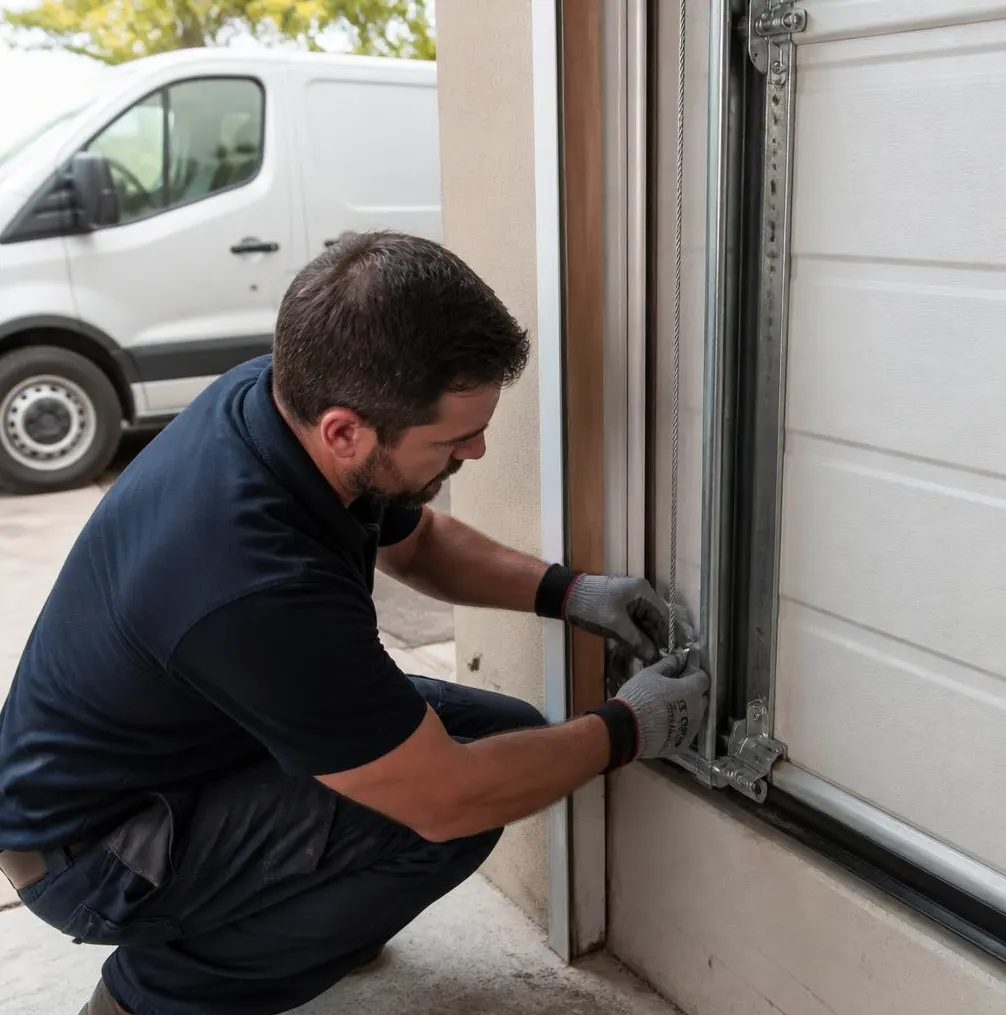
- Rust on hinges, hardware, or the tracks — this one gets ignored but shouldn't. Rusty hinges and rollers bind, which makes the opener work harder than it should, and that strain shortens the life of the opener and the springs.
- A musty smell from inside the garage — usually means water is getting past the door somewhere, often at the bottom seal, and it's been sitting long enough to start mildew.
Steel vs. Wood: Different Failure Points
Steel doors rust from the outside in, usually starting wherever the factory coating got chipped — a dropped bike, a scraped bumper, a rock kicked up by the mower. Left alone through a winter of road salt, that chip becomes a rust bloom, and a rust bloom near the bottom edge can eventually eat through the metal.
Wood doors fail differently. They swell when they soak up moisture and shrink again as they dry, and that constant expand-and-contract cycle through freeze-thaw season is what eventually causes warping, cracking, and delamination at the panel joints. A wood door that's swelling every spring and not fully drying out by summer is on a slow path toward needing panel replacement, even if it looks fine most of the year.
What Actually Helps
- Touch up chips as soon as you see them. A small spot of rust-inhibiting primer and matching paint on a steel door takes ten minutes and stops a chip from becoming a rust patch over a winter.
- Keep the bottom seal in good shape. A cracked or flattened seal lets water sit against the bottom panel instead of shedding it, which speeds up both rust and wood rot.
- Clean road salt off the bottom few feet every so often through winter. A quick rinse or wipe-down when you're already out there is enough — salt left sitting on metal accelerates corrosion.
- Check drainage at the base of the door during spring thaw. If water is pooling against the threshold instead of running off, that puddle is doing damage every single day it sits there.
- Don't paint over active rust or soft wood and call it fixed. Paint over pitted metal or wet wood traps moisture underneath and makes the problem worse, not better.
None of this requires special tools, and most of it is worth doing in an afternoon rather than letting it become the thing you argue about every spring.
When to Call Milwaukee Garage Door Pro
If the rust has gone past the surface — pitting, flaking that reveals bare metal, or any spot where you can see light through the panel — or if a wood door has soft, spongy sections at the bottom corners, that's past the DIY-touch-up stage. Our technicians handle this with garage door repair that addresses the damaged section directly, whether that means replacing a rusted bottom panel or hardware, or recommending full garage door installation when the damage has spread too far to patch. We also check hinges, rollers, and springs for salt corrosion during a standard visit, since rusted hardware is often the real reason a door has started binding or sounding rough, even when the owner's whole focus was on the rust spot they could see.
If you've got a rust spot or a soft corner you've been debating about, settle it for good — call Milwaukee Garage Door Pro and get it looked at before the next freeze-thaw cycle makes the decision for you.